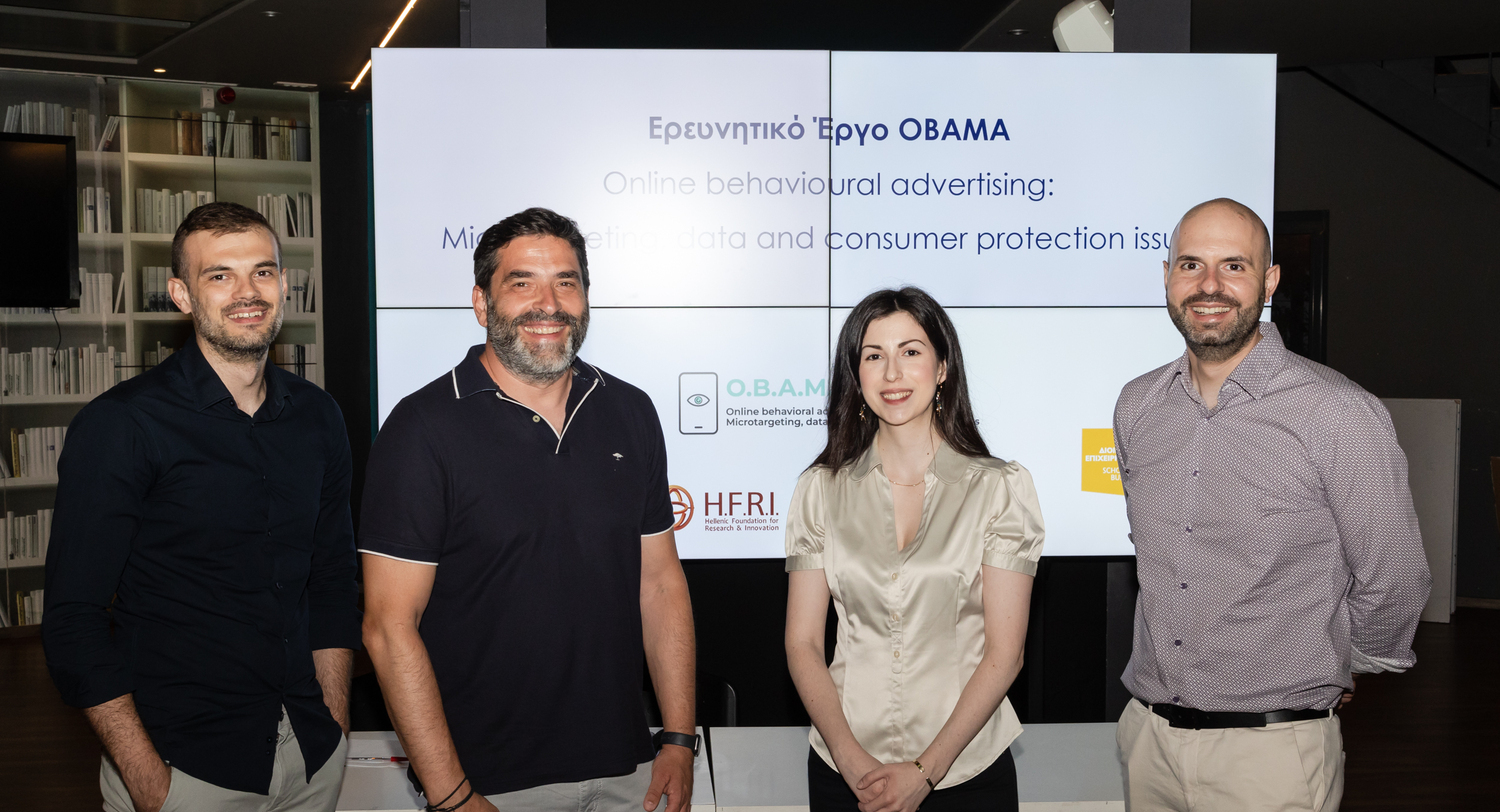

The O.B.A.M.A. project (Online Behavioural Advertising: Multi-stakeholder Awareness) concluded with a significant event on July 17, 2024, focusing on the legal framework surrounding online advertising.
The event took place at Innovathens (Technopolis, Municipality of Athens) with the research team members providing critical insights into various facets of online advertising, including data protection and consumer rights.
The project, which aims to promote awareness and understanding of Online Behavioral Advertising, shared substantial findings from its extensive research. This research included theoretical substantiation, empirical studies, and comprehensive surveys targeting both consumers and businesses.
An important part of the event was the presentation of survey results, which highlighted user perceptions and concerns regarding online advertising practices. These results underscored the necessity for clear and transparent data protection policies and robust consumer protection mechanisms. The surveys also revealed that while consumers recognize the benefits of personalized advertising, they remain wary of privacy issues and data misuse.
Additionally, the event addressed the evolving legal landscape of digital platforms and e-commerce, emphasizing the need for a balanced approach that protects user rights without stifling innovation and business growth. The guidelines presented at the event aimed to help users, businesses and authorities navigate the complex regulatory environment and adopt best practices for responsible advertising.
The event concluded with a vibrant Q&A session, where experts answered questions from the participants and debated the future of online advertising, considering the rapid advancements in technology and the increasing importance of ethical standards.
Participants from various capacities and backgrounds, e.g. data protection and consumer authorities, major online businesses and academic institutions, left with a better understanding of the intricate relationship between online advertising, legal frameworks, and consumer trust.
